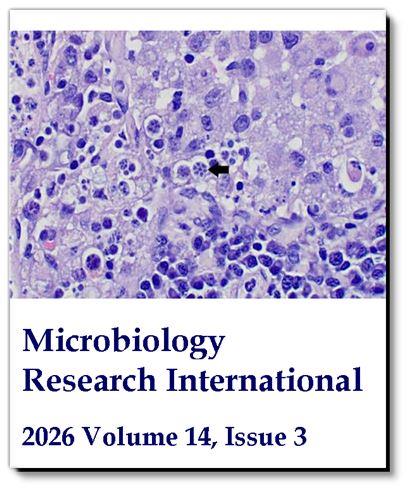
Mycological profile of domestic dogs in Port Harcourt Metropolis, Rivers State, Nigeria
Chuku W., Akani N. P., Sampson T. and Nrior R. R.Microbiology Research International
Published: July 31 2026
Volume 14, Issue 3
Pages 39-48
DOI: https://doi.org/10.5281/zenodo.21720377
Abstract
Domestic dogs (Canis lupus familiaris) are among the closest companion animals to humans, living within the same environment. Their close proximity to humans creates an avenue for the transmission of pathogenic fungi with zoonotic potential from dogs to their handlers. Therefore, this study aimed to assess the mycological profile of domestic dogs in Port Harcourt Metropolis, Rivers State, Nigeria. Using a structured questionnaire and sterile swab sticks, 200 samples were randomly collected from the skin, mouth, ear, and anus of 50 domestic dogs from six locations: Port Harcourt Town, Mgbuoba, Oroazi, Diobu, Rumuomasi, and Woji. The breeds sampled included Lhasa Apso, German Shepherd, German-Caucasian, Pit Bull, Chow Chow, Samoyed, Rottweiler, Aspin, Caucasian, Rottweiler-Canecosor, and Mongrel-Rottweiler, comprising both male and female dogs. The samples were analyzed in the laboratory using standard microbiological techniques. The results identified the presence of Candida albicans (80%), Penicillium spp. (44%), Rhizopus spp. (8%), Aspergillus flavus (70%), Aspergillus niger, Fusarium spp. (22%), and Rhodotorula spp. (8%). The highest distribution of fungal isolates was recorded in the mouth (40%), followed by the anus (31%), skin (25%), and ear (19%). Among the study locations, Port Harcourt Town had the highest distribution of fungal isolates (25%), whereas Woji recorded the lowest (8%). The dog breeds with the highest distribution of fungal isolates were Lhasa Apso (86%), Aspin (86%), and Pit Bull (86%). Male dogs (100%) had a higher distribution of fungal isolates than female dogs (86%). The distribution of fungal isolates according to the feeding pattern of the dogs showed that the highest fungal occurrence was observed among dogs fed only dog food/general food (100%), whereas the lowest occurrence was found among dogs fed the same food as their owners only (57%) and those fed dog food/general food supplemented by scavenging (57%). The dogs' healthcare routine also influenced fungal distribution, as dogs bathed daily recorded the lowest prevalence of fungal isolates (14%), compared with those bathed monthly (86%) and quarterly (71%). The presence of potentially pathogenic fungi in all body sites examined suggests that domestic dogs may serve as reservoirs of zoonotic fungal infections, posing a potential health risk to their owners and handlers. Therefore, regular personal hygiene among handlers and routine healthcare practices for dogs are essential to help mitigate the transmission of zoonotic fungal infections and other associated health risks.
Keywords: Mycology, domestic dogs, zoonotic infections, public health risk.
Full Text PDFThis article is published under the terms of the Creative Commons Attribution License 4.0